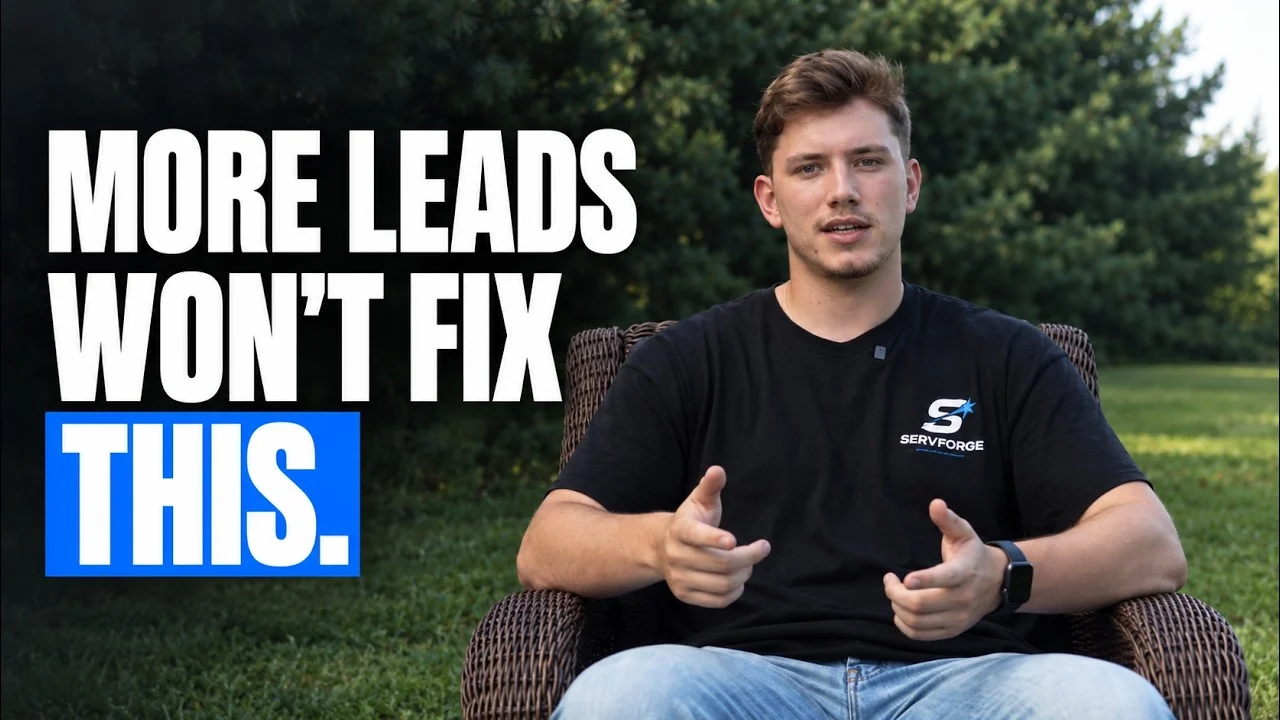
A new contractor lead is a signal of interest. It is not revenue.
Between the form fill and the booked job, the homeowner can lose interest, miss a call, contact another company, or decide that your team is too hard to reach. That is why response speed and follow-up deserve the same attention as lead generation.
Homeowners keep looking after they contact you
Someone who needs a contractor is probably comparing options. They may search Google, ask friends, browse Facebook, read reviews, and contact several companies.
They are unlikely to submit one form and wait 3 days for a reply. If your company responds tomorrow, the homeowner may already have an appointment with a competitor.
This creates a simple rule: the value of a lead depends partly on what your team does while the homeowner is still looking.
More lead spend can magnify a slow response problem
A slow system does not become efficient when you add volume. It becomes a more expensive slow system.
If 20 leads sit untouched today, increasing ad spend can create 40 untouched leads tomorrow. The report may show more conversions, while the schedule shows little improvement.
Before increasing budget, review:
- The time between an inquiry and the first response
- Who owns the response during business hours
- What happens after hours and on weekends
- Whether the team can see every form, call, and message in one process
- How quickly an interested homeowner can book the next step
One missed call is not a bad lead
People ignore unfamiliar numbers every day. They may be working, driving, picking up their kids, or eating dinner. They may see your call and forget to return it.
That does not prove they were unqualified.
A useful follow-up process gives the homeowner several easy ways to respond. Depending on the business, that can include:
- A prompt first call
- A short text that identifies the company and reason for reaching out
- An email that confirms what the homeowner requested
- A reminder tied to a clear next step
- A personal video when the project or estimate needs explanation
The process should help. Sending the same automated message 15 times can damage trust.
Match the follow-up to the request
Context matters.
A homeowner asking about roof replacement should receive a response about roof replacement. Someone asking about financing should receive the financing information they expected. A generic message makes the company feel disconnected from the original request.
Useful follow-up answers three questions quickly:
- Who is contacting me?
- Why are they contacting me?
- What should I do next?
Track the handoffs, not only the leads
Lead count cannot show where the process breaks. Track the stages that follow:
- New inquiry
- First response
- Two-way conversation
- Appointment booked
- Estimate completed
- Sale won or lost
If many inquiries never become conversations, response and follow-up are the likely constraints. If conversations become appointments but estimates do not close, inspect sales instead.
This is why the complete business system matters. The weakest handoff tells you which problem to solve.
Watch Alek explain the full system
Subscribe to Alek Reynolds on YouTube for more contractor growth breakdowns
Fix the leak before adding volume
Set a response standard, assign clear ownership, and build a follow-up sequence that respects the homeowner's context. Then measure how many inquiries become real conversations and appointments.
For the broader view, use the 7-stage contractor growth bottleneck diagnostic. If you want help reviewing the full path from attention through production, book a strategy call with ServForge.