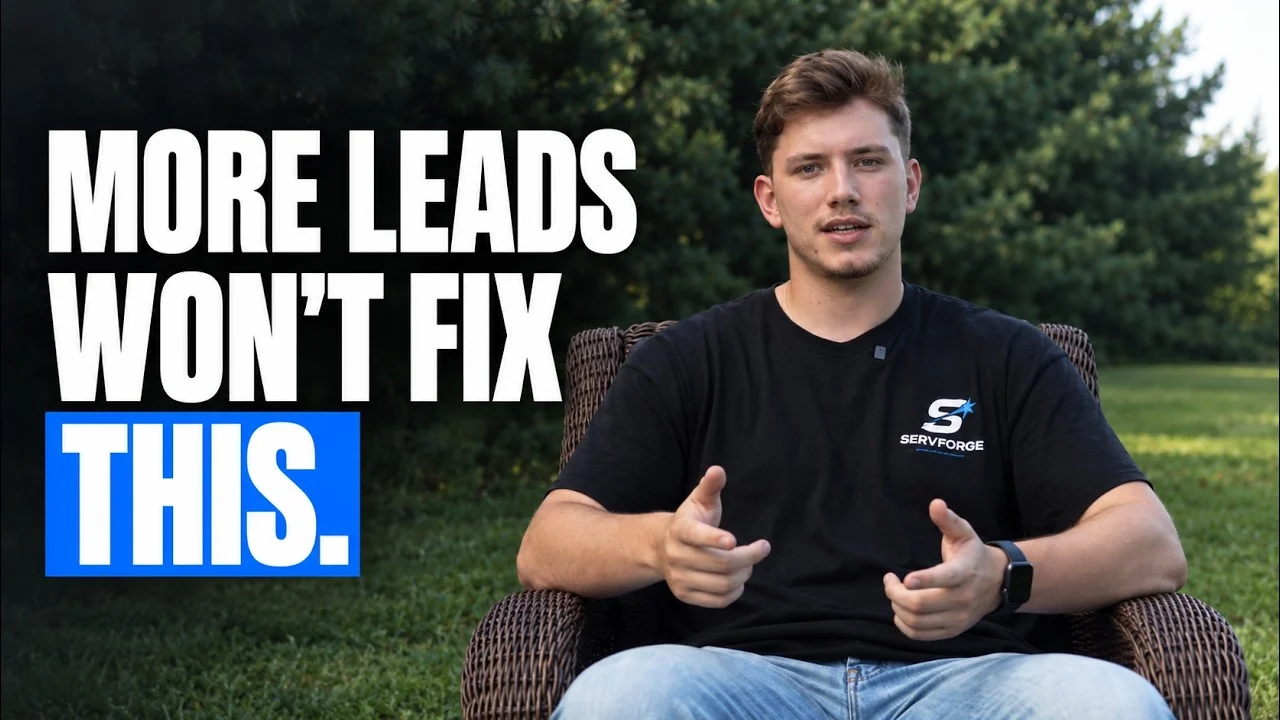
Contractors often describe growth problems as lead problems. Sometimes that diagnosis is right. Often, the real constraint sits somewhere else in the business.
A lead has not made you a dollar. Revenue depends on whether the right homeowner notices your company, trusts what they find, takes the next step, gets a fast response, stays engaged, buys, and receives the work on time.
That gives you a more useful question:
What is actually stopping this business from making more money?
The answer usually appears in one of 7 places.
1. Attention
Before a homeowner can hire you, they need to know you exist. Attention can come from Google, Facebook, Instagram, YouTube, referrals, yard signs, billboards, and branded trucks.
The problem is measuring attention as if it were the finish line. A video can earn 100,000 views. A campaign can reach 40,000 people. Those numbers still need to connect to qualified homeowners, estimate requests, and booked work.
Check: Which channels bring qualified inquiries, and which ones only produce activity?
2. Trust
A homeowner considering a roof, HVAC system, siding project, or renovation may spend thousands or tens of thousands of dollars. They will look at your reviews, website, social profiles, project photos, and videos before making contact.
Each public touchpoint is proof. It helps the homeowner answer whether your team looks trustworthy, current, responsive, and safe to invite into the home.
Check: Does your online presence support the promise made in your ads and referrals?
3. Conversion
Once attention and trust exist, the next action needs to be clear.
A visitor looking for roof replacement should see how to request a roof estimate. Someone who clicked an ad about financing should land on financing information. Sending every visitor to a generic homepage forces them to hunt for the answer.
Check: Does each high-intent page match the message that brought the visitor there?
4. Speed to lead
Homeowners rarely contact one company and wait patiently for 3 days. They compare contractors, ask friends, search Google, and may submit several forms.
If your team waits until tomorrow, responsive competitors gain an advantage. Buying more leads puts more people into the same slow system.
Check: How quickly does a real person respond during business hours and after hours?
5. Follow-up
One unanswered call does not make someone a bad lead. People work, pick up their kids, eat dinner, and ignore unfamiliar numbers.
A useful follow-up process can include calls, texts, emails, reminders, and personal homeowner videos. The purpose is to make the next step easier, not repeat the same automated message 15 times.
Check: What happens after the first missed call, and how does each touch help the homeowner?
6. Sales
If leads receive a fast response and appointments get booked, look at the sales process.
Close rate, average job size, and how your team explains value can create a larger opportunity than another campaign. A contractor closing 15% of opportunities may waste more demand after doubling lead volume.
Check: Why do homeowners choose you, why do they choose a competitor, and where do estimates stall?
7. Capacity
Capacity is easy to ignore because marketing reports rarely show it.
A contractor may be weeks booked out, short on installers, missing a salesperson, or supported by an owner already working 70 hours a week. Another 100 leads can put more pressure on a business that cannot fulfill the work.
Sometimes the right marketing move is recruiting creative, employer-brand content, or a temporary reduction in customer acquisition while the team catches up.
Check: Can the company sell and fulfill more work without damaging the customer experience?
Watch the full breakdown
Watch more contractor growth videos from Alek Reynolds on YouTube
Find the weakest handoff first
Walk through the full system: attention, trust, lead, response, follow-up, appointment, sale, and production.
The first weak handoff is your current growth constraint. Fix it, confirm the system works, and then add more demand.
Use the full contractor growth bottleneck diagnostic, or book a strategy call if you want ServForge to help identify the highest-value place to start.